


We sell, market and produce high-quality pork, beef and poultry and meat products such as meals and cold cuts. We continuously develop our entire production chain, focusing on areas such as product safety, animal welfare, social responsibility and reducing environmental impacts, in line with the targets of our responsibility programme. Our widely recognised brands include HK®, Kariniemen® and Via®.
HKFoods’ home market is Finland. Our production units are located in Finland and in Poland, which enables flexible adjustment of our production capacity and allows us to maximise our efficiency and synergies in developing our offering.
Operating environment
HKFoods business and operating environment are affected by global megatrends. For example, consumer trends and economic cycles have a direct and indirect impact both on our own business and that of our customers.
Through close cooperation with our customers, suppliers and other stakeholders, we strive to anticipate emerging trends in, for example, consumer behaviour, food retail, the food industry and food services in order to help us develop a commercially successful offering.
Meat consumption trends
The consumption of meat and meat products has so far remained stable in HKFoods’ home market of Finland. According to a survey by TNS Kantar Agri, 93 per cent of Finns eat meat, and the figure has remained stable since 2020. The latest survey was conducted in 2024. Pork consumption has declined slightly, whereas the consumption of beef and poultry has increased. In Finland total meat consumption is expected to increase slightly and in Europe decrease slightly by 2035.
Consumer trends
Food has become an increasingly important part of our daily lives and consumer identity. Consumers’ expectations regarding food moments and meals have changed.
What do consumers eat?
- Meat consumption habits have been changed by time use and new technologies. Demand and use of ready-to-eat alternatives has increased. All solutions making cooking easier are reflected in buying decisions, and products such as strips and chips, as well as pre-seasoned, breaded and tenderised meat products, are selling well.
- Increasingly, the traditional hot meal is replaced by various snacks. The changing role of snacks has given rise to a need for targeted meals, for example.
- In recipe searches, traditional Finnish recipes are the most popular. Foods familiar from childhood and the passing on of food traditions are particularly important to Generation Z. In contrast, people are looking for and boldly experimenting with either completely new taste experiences or new ways of cooking.
- Interest in healthy and new domestic products is growing. 70 per cent of Finnish consumers estimate they have a sufficiently healthy diet, but only 15 per cent strictly follow nutritional recommendations (Source: Study of Taloustutkimus on Finnish eating habits, Suomi syö).
- The new nutritional recommendations, published at the end of 2024, had some impact on the consumption of meat products in 2025, but they have not permanently changed the core of Finnish food culture. Finns are a bread-eating nation who also enjoy cold cuts.
- Total meat consumption has remained stable. It even increased slightly in 2025, but there has been a shift from red to white meat. Scarcity of domestic beef is affecting Finns’ everyday meal favourites, which often include minced meat as the main ingredient, by shifting consumption towards mixed and hybrid minced meats, poultry and pork, among others.
- Finnish consumers are cautious with their food purchases due to rising prices, which is increasing the popularity of private label brands. When dining out, consumers are choosing more affordable dishes.
- Price-quality ratio remains the most important criterion when Finns choose what to eat. Domestic origin is almost as important. Food is also expected to be tasty and nutritious, and the packaging and portion size must be right (Source: Ruokatietoa 2025 – Kantar Agri Oy).
- Food chain responsibility, such as animal welfare, circular economy and healthiness of food, are important to consumers.
Trust in domestic and Nordic food products is stronger than in products from outside the EU. - There are differences in eating habits and attitudes between generations: Older people emphasise healthiness and domestic origin, while younger people value convenience and new experiences. Casual eating and the use of semi-prepared foods are growing trends, especially among young people.
How do consumers eat?
- On weekdays, cooking is expected to be quick and easy. On weekends and holidays, people put time and money into eating together, planning meals and preparing food.
- No compromises are made on quality when it comes to celebration. Although the festive season, such as Christmas, may be shorter than before, it is all the more delicious. Big and small food celebrations and different harvest seasons bring variety to the calendar year. Work and leisure time are combined as well as possible with the help of ready meals.
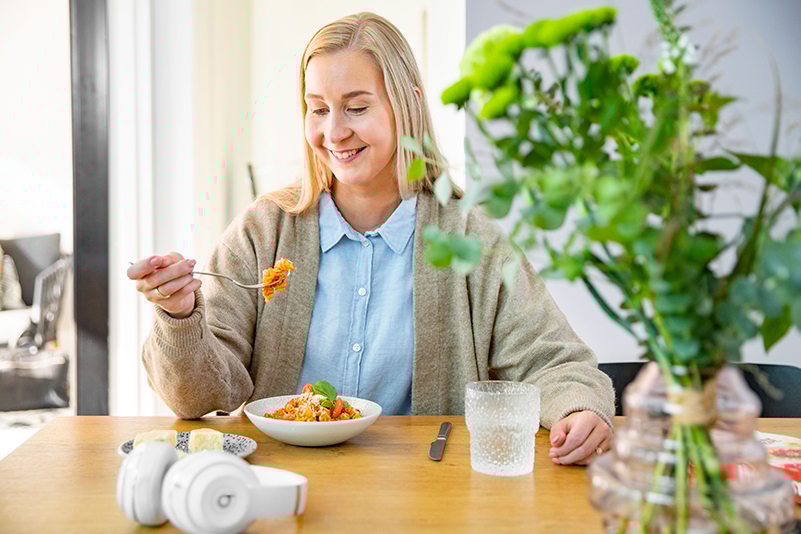
- Cooking skills have declined, and this trend increases the purchase of ready meals. Finns have a positive attitude toward ready meals. They meet the diverse needs of consumers and offer nutritionally good options, a variety of flavours, nostalgia, convenience and speed, indulgence and treats.
- Since people no longer invite friends over to their homes as often, restaurants have taken on the role of "living room". People enjoy going out for a meal together, and perhaps playing board games or singing karaoke.
Where do consumers buy food?
- Consumers have significantly reduced eating away from home. The underlying reasons are the economic situation and the hybrid work model.
- Especially eating at work has changed, and cooking at home, ordering food to be delivered and shopping at grocerants have increased with remote work.
- Finns have also significantly reduced their restaurant dining in their free time. In restaurant dining, fast food has increased and fine dining declined.
- A significant part of restaurant sales has shifted to retail stores with the grocerant phenomenon. Flexible service concepts in retail stores include sushi, salads, Asian cuisine, sandwiches and pizzas. In addition to cafes, stores now offer variety of restaurants and takeaway foods, and also, for example, breweries and juice bars. The latest trend is the growing popularity of home-style food at
store food counters. At the same time, many restaurants are closing their doors. - The increase in the number of small households is reflected in the selection offered by stores. It is easier to buy meals for one person than to prepare a small amount of food from scratch just for one’s own use.
- Events such as fairs, concerts, and sporting events thrive and attract visitors and diners. Food distribution channels are changing, and the long opening hours of stores are reducing visits, for example, to kiosks.