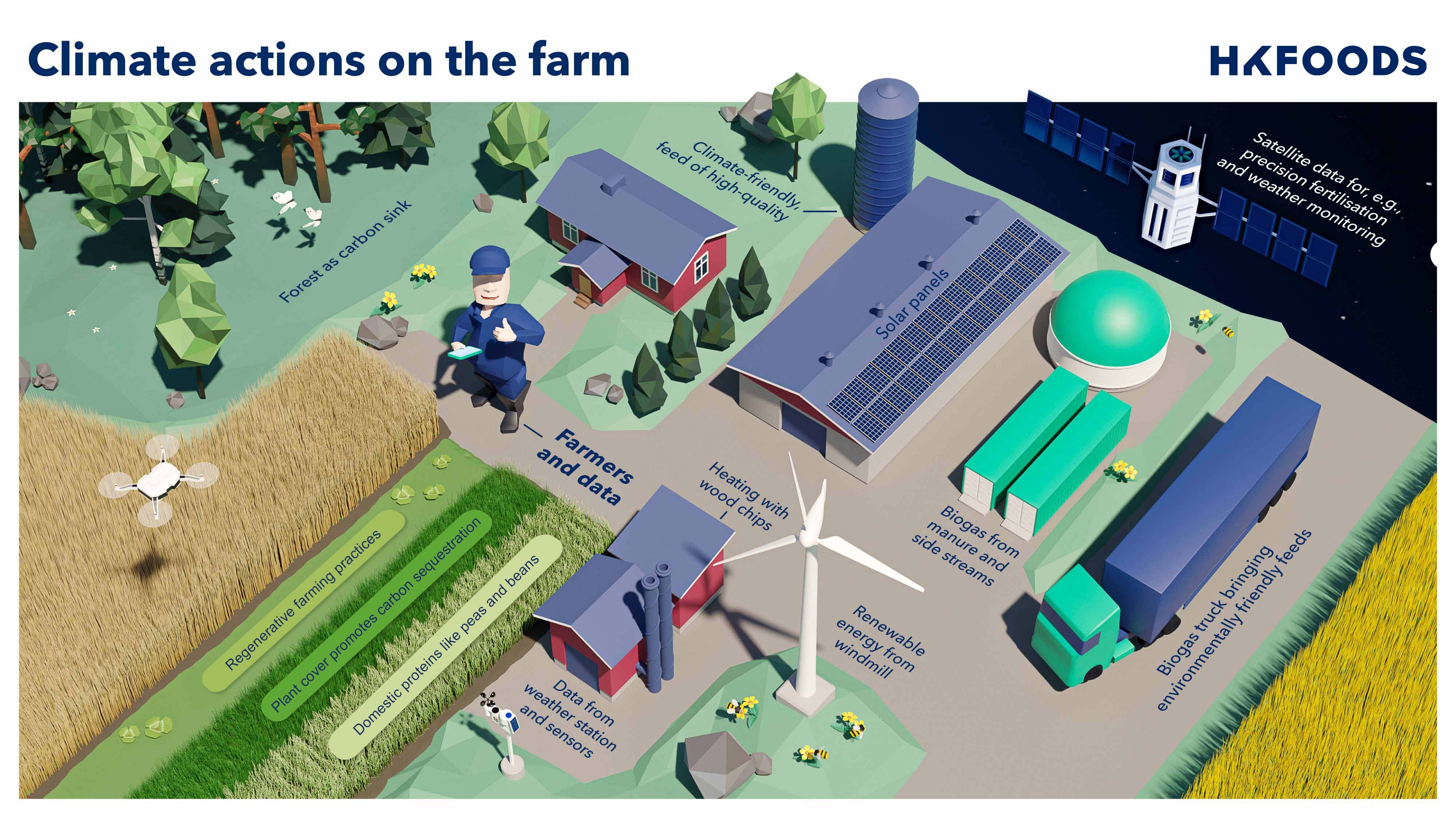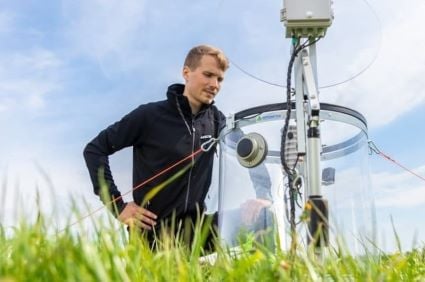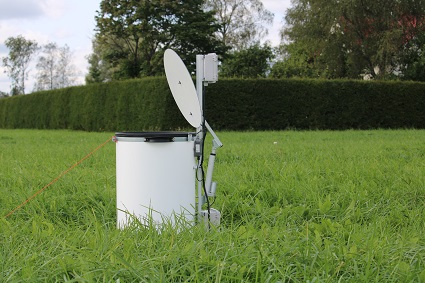


Our goal is to develop our food chain from farms to consumers while also taking environmental perspectives into account. The aim of our climate work at farms is to promote sustainable agricultural practices and reduce the climate emissions generated from raw material production.
We support our contract farms in developing their operations and reducing their emissions by strengthening climate expertise in primary production and by providing farm level emissions data. We conduct research and develop primary production together with our contract producers and other partners, and scale the best practices for use across our contract producer network.
In our responsibility programme, we are committed to reducing scope 3 FLAG greenhouse gas emissions related to the primary production of meat raw materials by 30.3 percent by 2030 compared to the 2022 level. FLAG emissions are generated from land-use change as well as land use in the primary production of meat raw materials.
Together with our contract farmers and other partners, we are moving towards our target. In primary production, we focus on reducing emissions from feed production and land use, which have a major impact on climate. Promotion of resource efficiency and carbon sequestration in field farming are at the heart of our efforts.
Our priorities of the climate plan in reducing the environmental impact of agriculture:
-
We reduce the climate impact of animal feed production through regenerative farming methods and by optimising the use of fertilizers and other production inputs as well as collaboration with feed suppliers.
-
We replace soy with domestic protein sources whenever possible and procure certified‑origin soy.
-
We improve feed efficiency by developing animal health and genetics.
-
We promote carbon sequestration in the fields together with our partners.
-
We develop the conditions for more efficient circular‑economy use of manure, for example in energy production or as fertilizer.
HKFoods’ contract farms have long worked to reduce the climate impact, for example by increasing the circular use of manure, introducing solar power and promoting resource efficiency in feed production. Reducing emissions from primary production requires diverse expertise, so in addition to us and our contract farmers, other companies as well as expert and research organisations will be involved. Together, we will look into new ways to reduce climate impacts and scale good practices across our home markets with an ecosystem-based operating model.
Responsibility programme 2026–2028 targets
| Programme target | Indicator | Target year |
| CLIMATE | ||
| Reducing greenhouse gas emissions by 2030 from 2022 levels in our own operations and value chain in accordance with the short-term targets approved by SBTi (Science Based Targets initiative) |
Indirect Scope 3 emissions from industrial operations: -42% (Includes Scope 3 categories: 3.1. Purchased services and goods, 3.3. Fuel‑ and energy‑related activities, 3.4 transportation and distribution in the value chain’s upstream 3.9 transportation in the value chain’s downstream, 3.15 Investments) |
2030 |